[01] The Working Definition
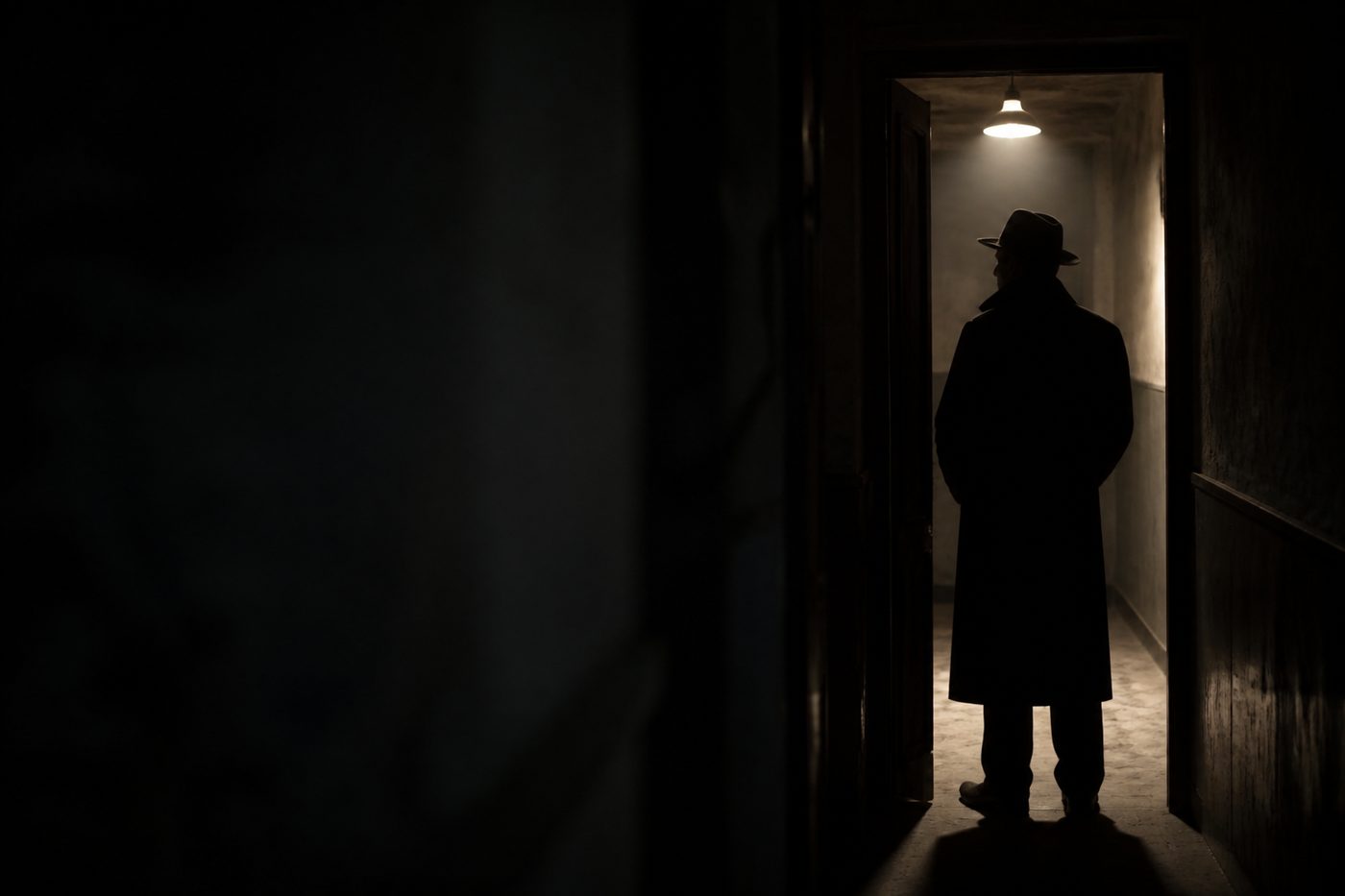
Film noir describes a visual and moral style applied mainly to American crime pictures and melodramas from the early 1940s to the late 1950s. A noir film is usually shot with hard, uneven lighting, set largely in a city at night, and built around a crime, a morally compromised lead character and an ending that feels inevitable rather than earned.
None of those traits is unique to noir on its own. A crime plot alone does not make a film noir, and neither does night photography by itself. What critics generally look for is the combination: the lighting, the setting, the character and the tone working together toward the same fatalistic effect.
[02] Why "Genre" Is the Wrong Word
![[02] Why 'Genre' Is the Wrong Word : What Is Film Noir? Defining a Style Without a Genre](/images/02-why-genre-is-the-wrong-word-what-is-film-noir-defining-a-style-with.jpg)
A genre like the western or the musical is usually defined by setting or by convention: certain locations, certain kinds of scenes, certain expected beats. Film noir does not fit that pattern cleanly. It turns up inside crime pictures most often, but also inside melodramas, war pictures and the occasional comedy played straight. What stays constant is not the story type but the treatment: the lighting choices, the moral tone and the sense of a plot closing in on its characters.
Film critics and historians have argued about the right label for decades, and "style," "mood" and "cycle" all show up in the literature alongside "genre." This guide uses "style," because it best explains why a noir western or a noir domestic drama can exist without contradiction.
[03] Six Traits Used to Identify a Film Noir
No single film shows every trait at full strength, and a film can be considered noir with only four or five of them present. The table below lists what to actually look for on screen.
| Trait | What to look for on screen |
|---|---|
| Low-key lighting | More shadow than light in a frame, faces often lit from below or at a sharp angle rather than evenly. |
| Urban night setting | Story largely set in a city after dark: streets, offices, bars, train stations. |
| A crime or investigation | A murder, a theft, a con or a search for someone driving the plot forward. |
| A morally compromised lead | A protagonist who bends or breaks the law rather than a conventionally clean hero. |
| A femme fatale or comparable figure | A character whose motives stay hidden and who complicates the protagonist's choices. |
| A fatalistic tone | A sense that the ending was set in motion early and cannot be avoided. |
[04] Where the Name Comes From
![[04] Where the Name Comes From : What Is Film Noir? Defining a Style Without a Genre](/images/04-where-the-name-comes-from-what-is-film-noir-defining-a-style-withou.jpg)
The term film noir was first applied to American crime pictures by the French critic Nino Frank, writing in the magazine L'Écran français in 1946. Frank borrowed the word noir from Série noire, a line of hard-boiled crime novels in French translation launched the year before by the publisher Gallimard. American filmmakers of the period did not use the label themselves; it entered common English-language film criticism only later.
- Film noir
- Literally "black film" in French. Coined by critic Nino Frank in 1946 to describe a wave of dark American crime pictures.
- Série noire
- A French book imprint launched by Gallimard in 1945, publishing hard-boiled American and British crime fiction in translation. Its name is the direct source of the term film noir.
- Low-key lighting
- A lighting setup with a high contrast ratio between light and shadow, used throughout this guide and defined in full in chapter five.
Chapter two picks up the visual half of that story: the German lighting tradition that reached Hollywood before the French critics ever had a name for what they were watching.