[01] What Chiaroscuro Means on a Film Set
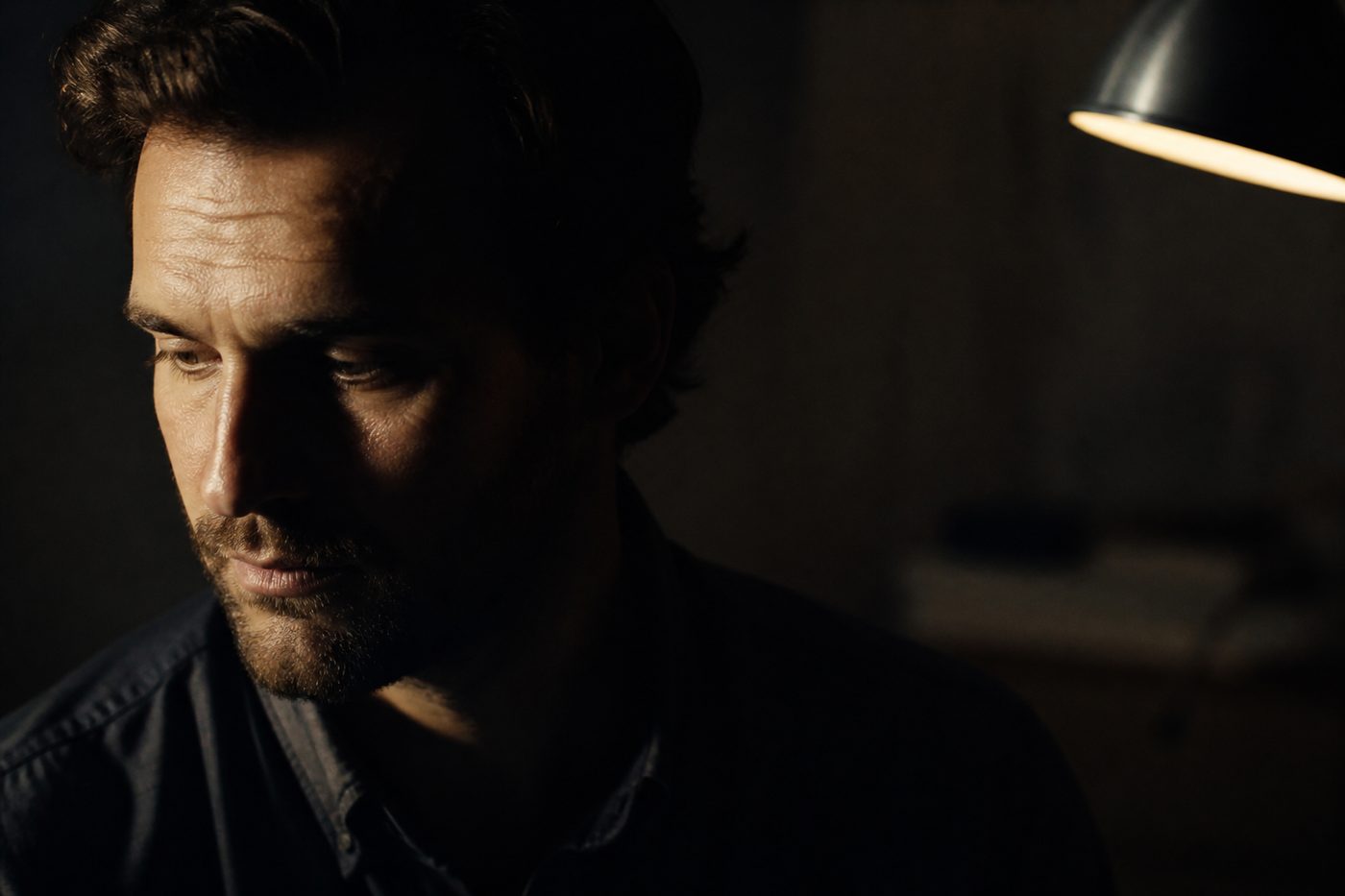
Chiaroscuro is an Italian term, literally "light-dark," first used to describe a technique in Renaissance and Baroque painting: building a scene almost entirely out of strong contrast between illuminated and shadowed areas, with little in between. The painter Caravaggio is among the figures most closely associated with the technique, using a single implied light source to pull figures out of near-total darkness.
Film noir cinematographers borrowed both the word and the principle. Rather than lighting a set evenly so every detail is visible, a noir shot typically lights only what the story needs the viewer to see, and lets everything else fall into shadow. What is hidden becomes as meaningful as what is shown.
[02] Key Light, Fill Light and the Low-Key Ratio
![[02] Key Light, Fill Light and the Low-Key Ratio : Chiaroscuro: How Noir Builds a Shot Out of Shadow](/images/02-key-light-fill-light-and-the-low-key-ratio-chiaroscuro-how-noir-bui.jpg)
Most film lighting, noir included, starts from a standard three-point setup: a key light as the main source, a fill light that softens the shadows the key creates, and a backlight that separates the subject from the background. What makes a shot "low-key" is not the number of lights but the ratio between them.
- Key light
- The primary light source in a shot, establishing where the main illumination comes from.
- Fill light
- A secondary, softer light used to reduce the shadows cast by the key light. Noir setups typically use very little of it.
- Low-key ratio
- A lighting ratio with a wide gap between key and fill, producing hard, deep shadow rather than an evenly lit frame. The technical opposite of "high-key" lighting.
- Practical light
- A light source visible within the frame itself, such as a desk lamp or a street light, rather than a hidden studio fixture.
[03] How a Low-Key Shot Is Typically Built
The sequence below describes the general logic a noir-style lighting setup follows, from establishing the source to deciding what stays hidden.
- Choose a motivating light source visible or implied within the scene, a window, a lamp, a doorway.
- Set the key light to match that source's direction and hardness, rather than lighting the actor evenly from the front.
- Reduce the fill light well below a standard ratio, allowing shadow to fill most of the frame.
- Decide deliberately what the shadow should hide, a face, a weapon, a reaction, rather than letting it fall randomly.
- Add a hard backlight or rim light only where separating the subject from a dark background is needed.
[04] Four Recurring Lighting Devices
![[04] Four Recurring Lighting Devices : Chiaroscuro: How Noir Builds a Shot Out of Shadow](/images/04-four-recurring-lighting-devices-chiaroscuro-how-noir-builds-a-shot-.jpg)
A handful of specific setups recur often enough in noir cinematography to be treated as a vocabulary of their own.
| Device | Visual effect |
|---|---|
| Venetian blind shadow | Striped shadow cast across a face or wall, suggesting confinement or surveillance |
| Silhouette against a window | A figure reduced entirely to outline, withholding facial expression |
| Single practical lamp | A visible, low source that motivates a tight pool of light in an otherwise dark room |
| Hard rim light | A sharp edge of light separating a dark figure from an equally dark background |
Lighting builds the frame. Chapter six turns to who typically stands inside it, starting with noir's most discussed recurring character.